

Moisture is part of everyday operations in many areas of food production. Wherever meat, fish, fruit, or vegetables are processed, water, cleaning agents, and production residues are regularly present in the working environment. Floors, work surfaces, and tools frequently come into contact with moisture.
The consequences go beyond general workplace safety. As moisture levels increase, handling knives and other cutting tools becomes more challenging. An insecure grip or a brief moment of inattention can be enough to cause a cut injury.
Risks occur particularly often under the following conditions:
- Wet hands or floors in meat and fish processing
- Water spray from wet cleaning processes between production shifts
- Slippery surfaces caused by fats, marinades, or cooling water
Even experienced employees face an increased risk of injury under these conditions. Appropriate hand protection is therefore essential in wet production environments.
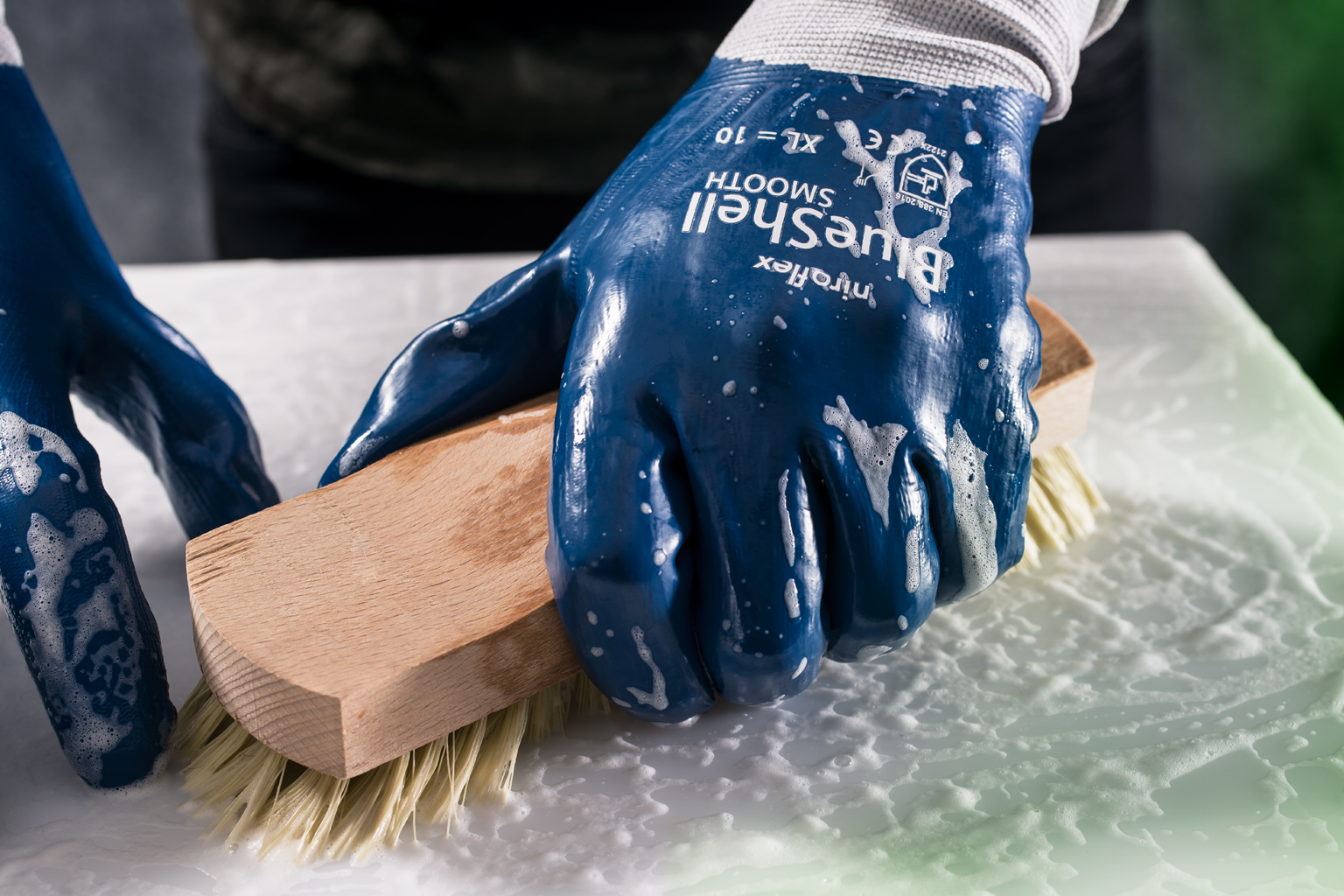
Requirements for Gloves in Wet Production Areas
Many conventional gloves lose part of their grip performance when exposed to moisture. In wet work areas, cut protection alone is often not sufficient. Gloves must fit securely, provide reliable grip even in wet conditions, and meet the hygiene requirements of food production.
Several characteristics play an important role.
High wet-grip performance ensures that tools can be handled safely even when moisture is present. Structured or coated surfaces improve grip and support controlled working conditions.
Mechanical protection according to EN 388 is equally important. The protective performance must remain effective even when gloves are regularly exposed to moisture.
In addition, food production places special demands on the materials used. They must be hygienic, easy to clean, and compliant with food safety requirements.
Comfort also plays an important role. Protective gloves are often worn for extended periods and must continue to perform reliably throughout daily use.
Gloves that meet these requirements can help reduce workplace accidents in wet production areas.
niroflex Gloves for Wet Working Environments
niroflex develops gloves specifically for the requirements of the food industry, including applications where moisture, regular cleaning processes, and high working speeds come together.
The niroflex BlueCut dry combines flexible hand protection with a secure grip in wet conditions. This makes it suitable for various food-processing applications where cut protection, grip stability, and hygiene are equally important.
Occupational Safety in Wet Zones
Suitable gloves are an important part of occupational safety. However, hand protection alone is not enough in wet production areas. A comprehensive safety concept that includes work processes, employee training, and regular inspections is essential.
This starts with targeted employee training. It should be clearly defined which glove is intended for which work area and how it should be worn correctly.
Regular glove inspections are equally important. Damage such as tears, wear, or deformation should be identified before every shift.
The working environment itself also requires attention. Slip-resistant mats and properly maintained knives can help reduce overall risk.
Clear guidelines for glove replacement, cleaning, and storage provide additional safety in day-to-day operations.
Occupational safety in wet food production is not a one-time measure. Suitable protective gloves, clearly defined processes, and regular inspections remain essential components of a safe working environment.
Frequently Asked Questions
Which gloves are suitable for wet hands?
Gloves with a structured or coated surface are suitable for wet hands. Models such as the niroflex BlueCut dry provide a secure grip even in wet conditions while also protecting against cut injuries.
Are stainless steel mesh gloves waterproof?
No. Stainless steel mesh gloves provide reliable protection against cuts and puncture injuries, but they do not prevent water from passing through. For wet cleaning applications or permanently wet work areas, coated gloves or glove liners may be a useful addition.
How often should gloves be inspected in wet zones?
Gloves should be inspected before every shift and after every cleaning process. Moisture, cleaning procedures, and mechanical stress can accelerate material wear. Regular visual inspections are therefore important.
Learn more about our gloves for food production
Or contact us directly for individual advice – Contact