

In food production, working days are long and the demands placed on PPE are high. In wet areas, a glove must not only protect employees, but also meet strict hygiene requirements. As a manufacturer, we at niroflex know that even the best equipment is of little use if it is not properly cared for after each shift.
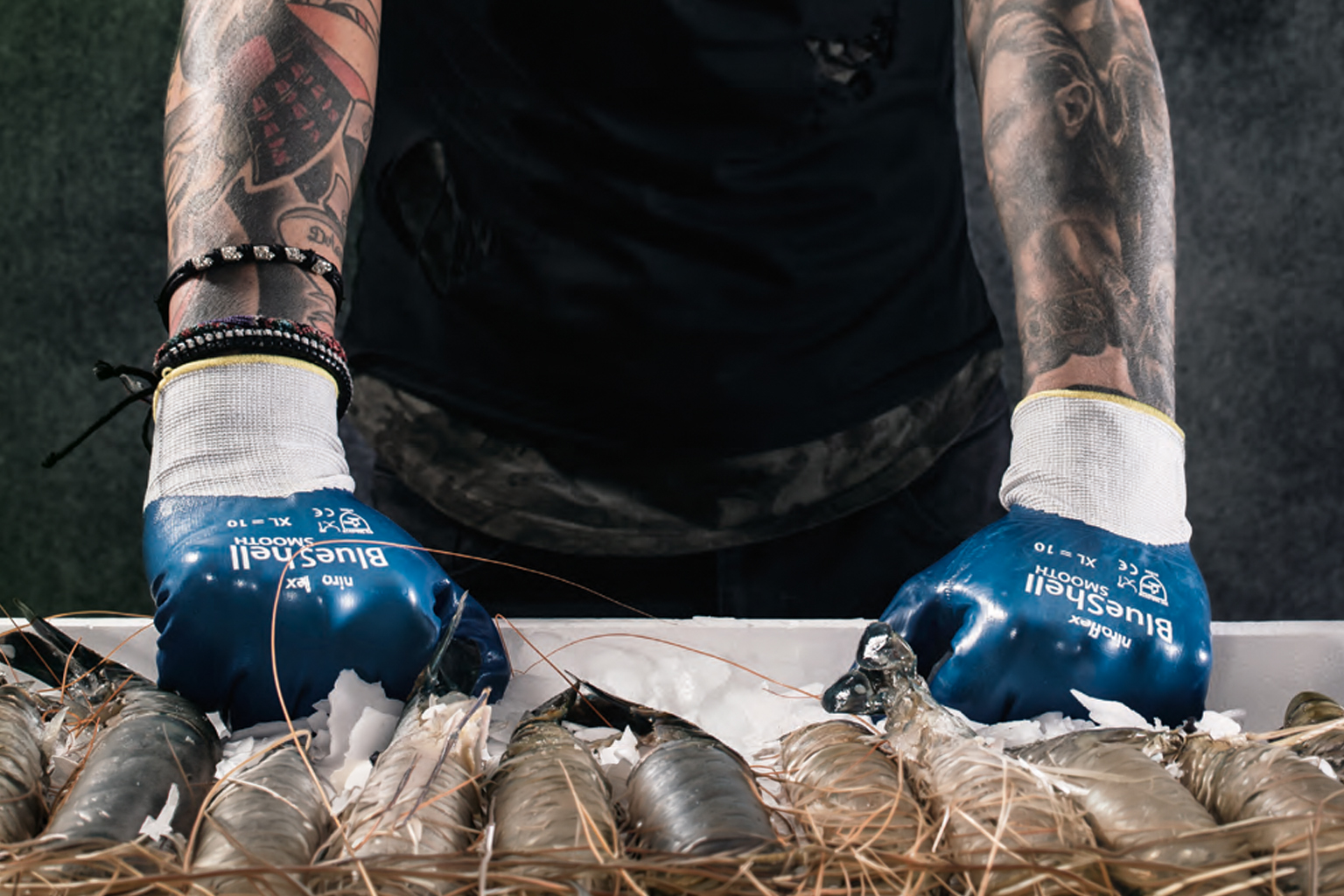
Everyday work in wet areas: Why cleaning is more than just rinsing
When production stops, cleaning begins. Many companies focus on machines and floors, while gloves are often treated as a secondary task. However, especially in wet areas, organic residues and residual moisture in the glove structure can create ideal conditions for germs. A glove that cannot dry properly loses hygiene performance and service life, even when it is a high-quality niroflex product. Prolonged moisture can make the material more brittle over time and affect the ergonomic fit.
How to maximize the service life of your protective gloves
A few simple but effective rules can help you manage your equipment more efficiently and extend the service life of your niroflex products:
Targeted drying
This is the most critical point. If gloves are stored damp in lockers or boxes, the material can suffer significantly. Proper ventilation is essential. Store gloves hanging in a well-ventilated place so that residual moisture can fully escape. This is the only way to maintain the flexibility of the material and the fit for the next use.
Choose cleaning agents carefully
Make sure your cleaning processes are suitable for the gloves you use. Aggressive substances can attack special coatings faster than necessary, including the coating that provides the “Dry effect” on models such as the BlueCut dry.
Keep an eye on wear
Make your team aware of the importance of checking gloves before each shift – a key part of the niroflex safety promise. It is not just about finding holes. Worn areas on the fingertips or reduced grip are clear signs that the glove no longer fully performs its protective function. Replacing gloves in good time is more economical than taking the risk of a cut injury.
More than just PPE wear
Companies that cut corners on care often end up replacing gloves more frequently. A well-planned storage concept – for example using hook rails or special hanging systems that ensure all-round ventilation – is an investment that directly pays off in the service life of your niroflex equipment. Our goal is for PPE to withstand the demands of daily cleaning cycles over the long term without compromising wearer comfort due to tired or damp material.
A look at the coming months
At the moment, moisture is our main focus. However, the requirements in food processing are constantly changing – not only due to environmental conditions, but above all due to the specific cutting requirements at each workstation. Next month, we will therefore address a fundamental question: When is a chainmail glove necessary, and when is a modern cut-resistant glove sufficient? We will provide a practical decision-making guide to help you balance safety, ergonomics, and cost-effectiveness when choosing your niroflex hand protection.
Do you need support with your PPE equipment?
Do you have general questions about selecting the right protection? Read our article on hand protection in wet environments.
Are you looking for suitable accessories for the correct storage and care of your niroflex products? Go directly to our accessories.
Or would you like individual advice for your business? Contact us directly – we will find the right solution for your requirements.
“`