

In commercial kitchens and meat processing facilities, occupational safety, hygiene, and efficient workflows must go hand in hand. At the same time, knives are among the most important tools used on a daily basis. Terms such as “chainmail glove”, “butcher glove”, and “cut-resistant glove” are often used interchangeably. In practice, however, this can lead to incorrect decisions when selecting personal protective equipment (PPE). This niroflex guide helps decision-makers choose the right hand protection for each specific task.
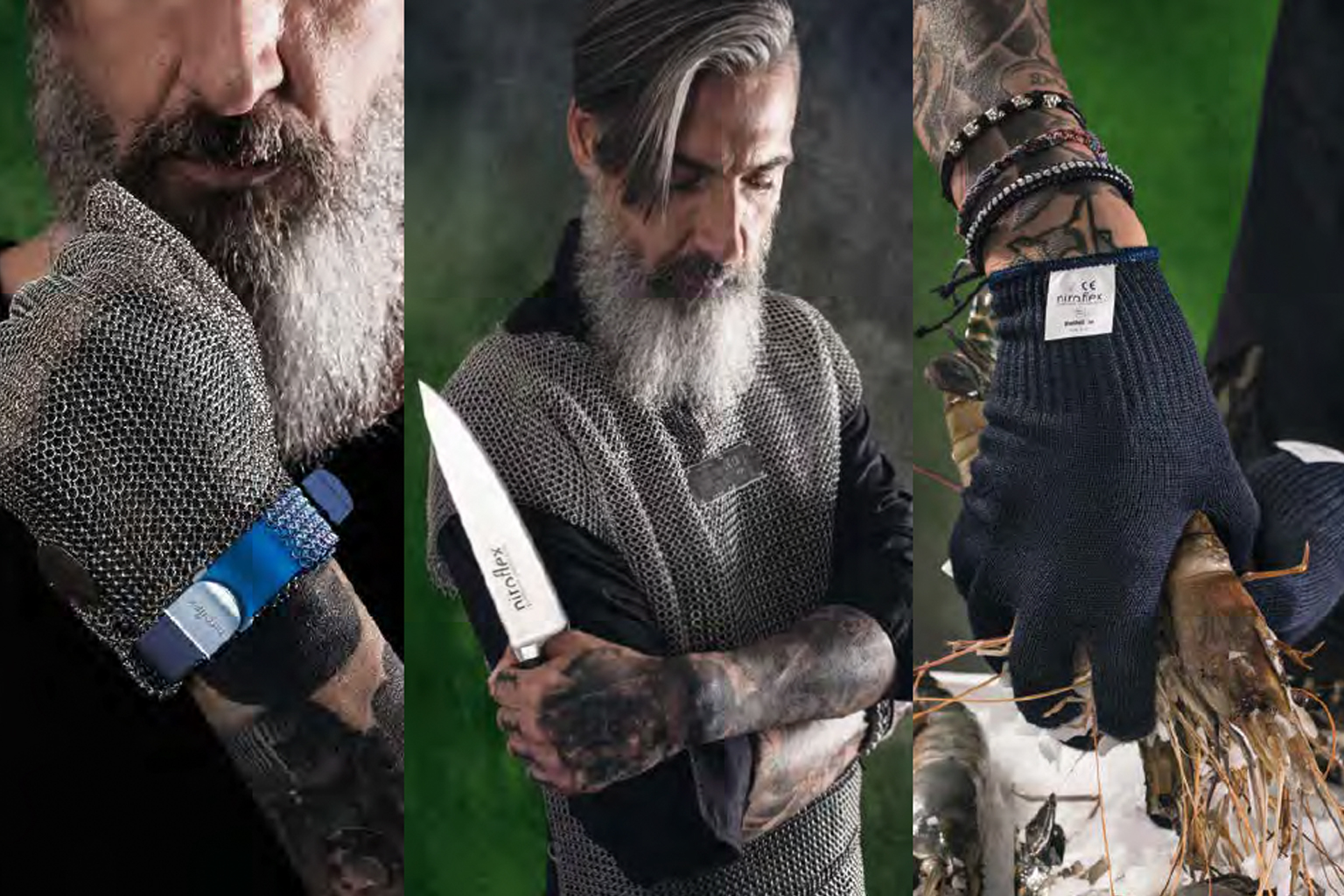
Why Choosing the Wrong PPE Can Be Costly
Many businesses select the wrong type of hand protection. In some cases, heavy stainless steel chainmail gloves are used where a lightweight textile cut-resistant glove would be more ergonomic. In others, standard cut-resistant gloves are used where chainmail protection is actually required. The result is increased employee fatigue, slower workflows, and a higher risk of workplace injuries.
The Comparison: Chainmail vs. Advanced Textile Materials
Stainless steel chainmail – the classic niroflex chainmail glove – remains the preferred solution wherever high levels of force are involved. When knives are guided at unfavorable angles or when accidental contact with the blade is more likely, the metal mesh structure provides a level of protection that textile materials cannot match.
Modern cut-resistant gloves made from advanced fiber-based materials are often the better choice for preparation and processing tasks. They are lighter, more flexible, and help reduce strain on the hands during long shifts.
FAQ: Frequently Asked Questions from Everyday Operations
Do we need chainmail gloves for every task in a commercial kitchen?
No. This is a common misconception that can place unnecessary strain on employees. Chainmail gloves are essential for high-risk tasks such as meat cutting and deboning, but for many standard kitchen operations, modern cut-resistant gloves are the more practical choice. They provide the required level of protection while offering significantly greater comfort and flexibility.
Are chainmail gloves waterproof?
No. niroflex chainmail gloves are made from stainless steel ring mesh and are designed solely for mechanical protection. The mesh structure is completely open and therefore not waterproof. In wet environments where hygiene requirements are critical, users typically combine chainmail gloves with suitable undergloves.
How do I determine the right solution for my business?
Personal protective equipment is not a one-size-fits-all product. At niroflex, we evaluate operational processes, working conditions, and specific applications to identify the most suitable solution. If you would like individual advice, please contact us directly at niroflex.de/en/contact-niroflex/.