

Cut and Puncture Resistant Gloves in the Food Industry:
Increased Safety in Operations
Cut injuries are among the most common workplace accidents in the food industry – yet they are often underestimated. Even minor injuries can not only endanger employee health but also disrupt production processes and lead to significant follow-up costs.
In work environments where sharp knives, blades, and cutting tools are used every day, reliable hand protection is not an optional extra but a fundamental requirement for safe and efficient operations.
Modern protective gloves, particularly stainless steel mesh gloves that provide puncture resistance as well as cut-resistant properties, make a decisive contribution to risk reduction.
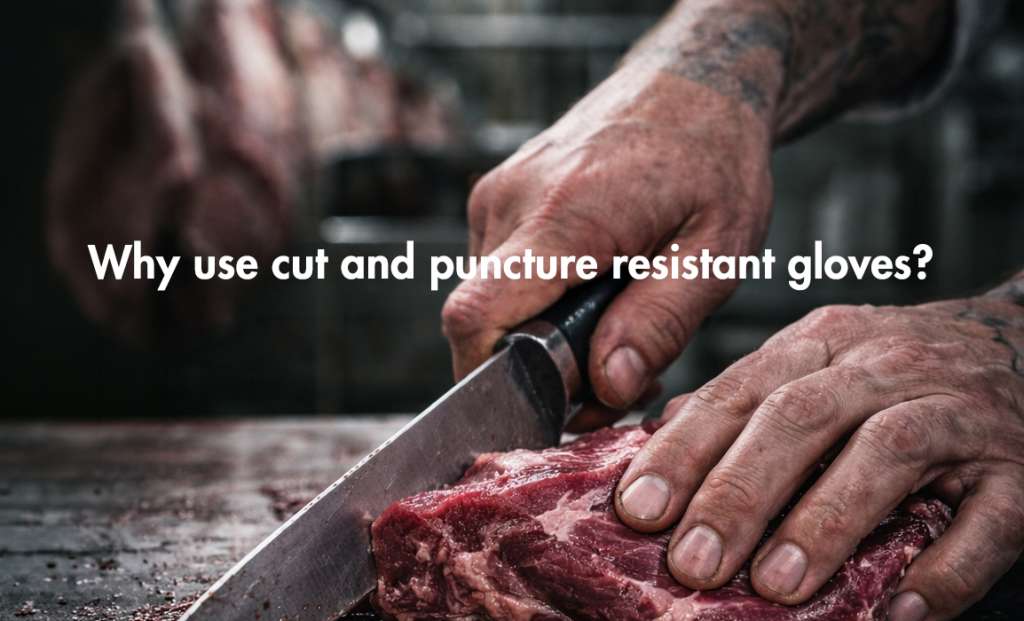
What Risks Exist in the Food Industry?
The demands in food production are high: speed, precision, and consistent quality are essential. At the same time, these very factors create typical sources of risk.
The most common risks include:
- Working with sharp knives and tools
- Time pressure in production and processing operations
- Wet and slippery working environments
- Routine processes that can lead to carelessness
- Defective protective equipment
- Untrained end users
Hands and fingers are particularly exposed to an increased risk of injury during manual cutting tasks. Studies and accident analyses show that a large proportion of injuries occur precisely in these areas.
For companies, this results not only in health-related consequences but also in economic impacts:
- Employee downtime
- Disruptions in the production process
- Rising costs due to workplace accidents
- Increased pressure during audits and certifications
A systematic approach to risk reduction is therefore essential.
What Are Cut and Puncture Resistant Gloves and How Do They Work?
Cut and puncture resistant gloves are specially designed personal protective equipment intended to effectively prevent or significantly reduce injuries caused by sharp tools.
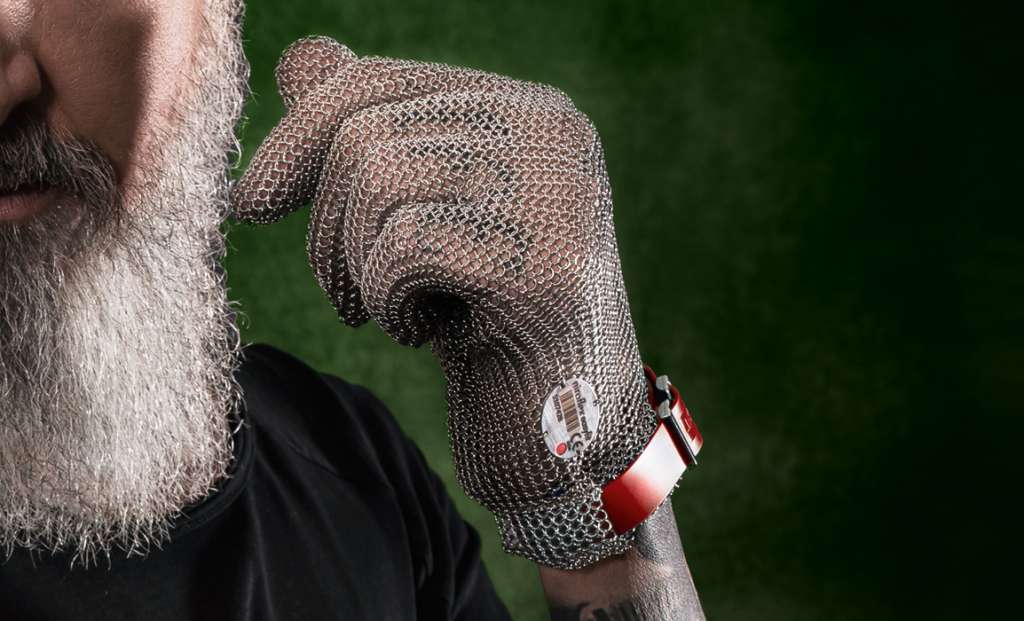
In demanding areas of the food industry, stainless steel mesh gloves in particular have become well established. They offer both puncture-resistant and cut-resistant properties and consist of thousands of welded metal rings, forming a flexible yet highly durable protective structure.
The protective mechanism is based on preventing the blade from penetrating freely upon contact. Instead, the applied force is distributed across the mesh, significantly reducing the risk of puncture and cut injuries.
Compared to other materials, stainless steel mesh solutions offer decisive advantages:
- Very high mechanical strength
- Reliable protection even under intensive use
- Long service life in industrial use
- Easy and safe cleaning
- High resistance to moisture and cleaning processes
- Breathable
- Puncture-resistant and cut-resistant
This combination of protective performance and ease of cleaning is a key factor, especially in hygiene-sensitive environments.
Where Are Cut and Puncture Resistant Gloves Used?
Cut and puncture resistant gloves are now an integral part of many areas within food processing.
In meat processing, they are used in particular for cutting, deboning, and portioning—wherever high precision is required and there is an increased risk of injury.
In fish processing, they are used for filleting, cutting, and other precise trimming tasks where safe hand control is essential.
They also contribute to risk reduction in general food production, for example when cutting vegetables or during further processing of products.
In industrial operations, they are also relevant wherever manual tasks are combined with automated processes.
As a general rule, whenever products are handled manually and processed with sharp tools at the same time, reliable cut and puncture protection is essential.
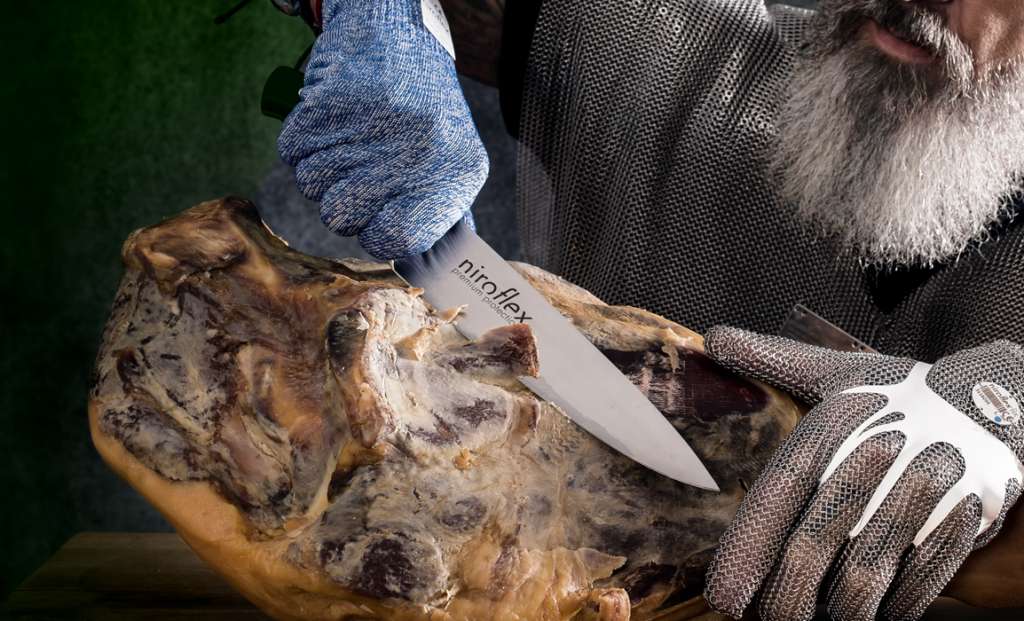
Even minor cutting mistakes can result in serious injuries – protective gloves provide reliable safety.
What Benefits Do Cut and Puncture Resistant Gloves Offer for Companies?
The use of high-quality cut and puncture resistant gloves not only improves employee safety but also has a direct impact on overall process quality.
Key advantages include:
- Significant reduction in cut and puncture injuries
- Reduced downtime and more stable workforce planning
- Safer and more efficient workflows
- Support in complying with occupational safety and hygiene standards
- Improved results in audits and certifications
In addition, durable stainless steel mesh solutions contribute to cost efficiency. Their robustness and reusability reduce the need for replacements in the long term.
For companies, this means greater safety, more stable processes, and improved operational planning in day-to-day operations.
Conclusion
Cut and puncture injuries represent an ongoing risk in the food industry, but they can be significantly reduced with the right measures.
Cut and puncture resistant gloves, particularly those made from stainless steel mesh, provide a reliable and proven solution to combine safety, hygiene, and efficiency.
For companies, they are a key component of modern occupational safety strategies.
Frequently Asked Questions About Cut and Puncture Resistant Gloves
Why Are Cut and Puncture Resistant Gloves Particularly Important in the Food Industry?
They significantly reduce the risk of cut and puncture injuries and help prevent downtime as well as disruptions in production processes.
Why Is Stainless Steel Mesh Commonly Used?
Stainless steel mesh offers very high resistance, is durable, and can be cleaned to meet strict hygiene requirements.
Are Cut and Puncture Resistant Gloves Suitable for All Work Areas?
They are particularly useful wherever sharp tools are used and products are handled manually. However, the selection should always be tailored to the specific application.
You can find more information about our puncture-resistant gloves here.